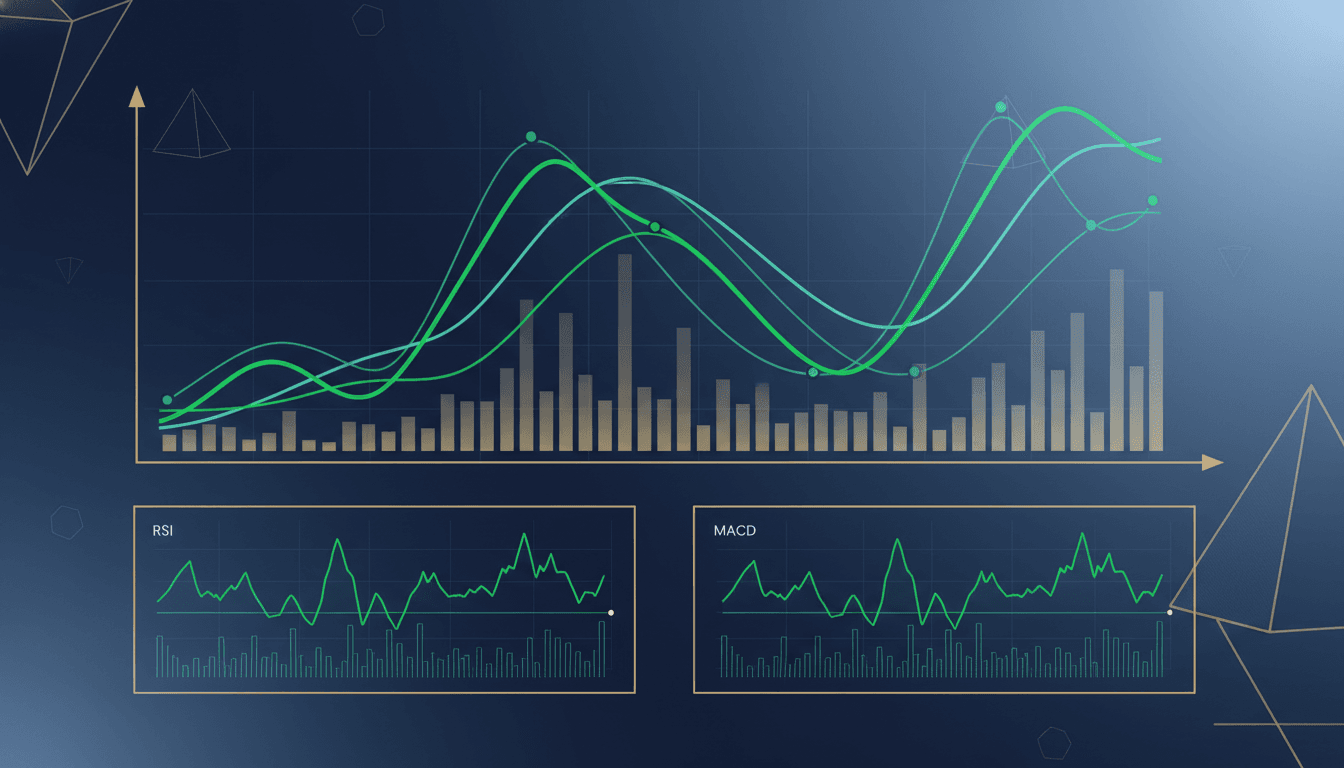
Introduction: Why Does This Matter?
Many market participants focus only on price movement: did the stock rise or fall? But in technical analysis, price alone is not enough to understand the full picture. This is where trading volume becomes important, because it adds another layer that helps assess whether a move is strong or weak.
For investors and market followers in the Egyptian Exchange, understanding volume is especially useful because liquidity can vary from one stock to another. Some price moves may look significant on the chart, yet they may not carry the same weight if they are not supported by clear trading activity. That is why reading volume alongside price can lead to a more disciplined and realistic view.
What Is Trading Volume?
Trading volume is simply the number of shares traded خلال a given period, whether that is one session or several sessions. It does not just tell you that price moved; it helps you ask a deeper question: was that move backed by strong market participation, or was it relatively limited?
The core idea is straightforward:
- If a stock rises on high trading volume, that is usually seen as stronger confirmation of the move.
- If a stock rises on weak volume, the move may be less convincing or less robust.
In other words, price shows the visible direction, while volume helps assess the strength behind that direction.
How Is It Used in Practice?
1. Confirming Price Movement
The simplest use of volume is to check whether a price move is more than just a visual change. When a stock rises and that rise is accompanied by notable trading activity, it may reflect broader market interest in the move. If the same rise happens on limited volume, it may be too early to treat it as a strong move on its own.
2. Assessing Trend Strength
In an uptrend, it is useful to watch whether upward waves come with better volume than pullbacks. This does not provide a final verdict by itself, but it helps in judging whether the trend is maintaining momentum.
In a downtrend, heavy volume during declines may point to stronger selling pressure, while lighter volume during declines may suggest that downside momentum is less forceful. Still, this should be treated as one part of the picture, not the entire picture.
3. Watching Breakouts and Breakdowns
Another practical use of volume is around important technical levels. When price moves above resistance or below support, volume can help assess how meaningful that move may be.
A breakout supported by strong volume is generally more convincing than one that happens in relatively quiet trading. This does not guarantee continuation, but higher volume may indicate that more participants are involved in the move.
4. Distinguishing Active Moves from Fragile Ones
Not every rise is equal, and not every decline is equal. A price move may look clear, but volume helps reveal whether it is supported by broad participation or by limited trading. This matters in a market where liquidity can differ significantly across stocks.
A Simple General Example
Suppose a stock starts rising over several sessions. If that rise is accompanied by a clear increase in trading volume, it may suggest that the move is attracting broader market participation and is not just a passing price change.
If the same stock rises but on weak volume, the move may still look positive on the chart, yet it may be technically less convincing. That does not mean the rise is invalid; it means that confidence in the move is lower if we rely on price alone.
This simple example captures the main idea: volume does not determine direction by itself, but it helps measure the quality of the move.
When Is Volume Most Useful?
When evaluating the strength of a rise or decline
If you are trying to understand whether the current move is well supported, volume is a very useful tool. It helps distinguish between a move backed by clear participation and one that may be limited or fragile.
When comparing one session with another
Watching volume across multiple sessions is more meaningful than looking at a single session in isolation. Sometimes the value of volume lies not in whether it is high or low in absolute terms, but in how it changes relative to prior sessions.
In a market that requires discipline
In the Egyptian Exchange, it is not enough to look only at the price pattern, especially with varying liquidity across stocks. Combining price and volume helps reduce superficial readings and encourages a more balanced interpretation.
When Can Volume Be Misleading If Used Alone?
Despite its importance, volume is not a magic tool. It may be high without necessarily meaning that the trend is fully confirmed. Some moves may appear strong in the moment, only for the market to lose momentum later.
That is why volume should not be read in isolation from other elements such as:
- The price trend itself
- Support and resistance levels
- The structure of the move across several sessions
- The broader context of the stock or the market
A signal becomes more useful when several factors align. Relying on volume alone can lead to rushed conclusions.
Common Mistakes Beginners Make
1. Focusing on price and ignoring volume completely
This is one of the most common mistakes. A beginner may see a stock rising and assume that this is enough, without asking whether the move is supported by strong trading activity.
2. Treating any high volume as automatically positive
High volume does not automatically mean the move is constructive or that the trend will continue. What matters is the relationship between volume and price movement, not volume in isolation.
3. Reading one session without context
A single session may look very active, but a better judgment requires comparing it with previous sessions and looking at the broader path rather than one snapshot.
4. Using volume as a complete substitute for other tools
Volume is a powerful supporting tool, but it is not a replacement for broader technical analysis or disciplined decision-making. In markets with uneven liquidity, it becomes even more important to build a view using more than one factor.
5. Confusing activity with real strength
A stock may look active because trading is heavy, but activity alone is not enough. The more important question is: does that activity support a clear direction, or is it simply crowded movement without strong technical meaning?
Practical Takeaway
Trading volume matters as much as price because it helps you judge whether a price move is truly supported. The key educational rule is simple: a stock rising on high trading volume is usually a stronger confirmation than a rise on weak volume.
But volume works best as part of a broader reading that includes price, trend, support and resistance, and the nature of liquidity. In the Egyptian Exchange in particular, this approach can support more disciplined analysis and reduce the risk of being misled by moves that look strong only on the surface.
If you want to remember the idea in one sentence, it is this: price tells you what is happening, and volume helps you judge how strong it is.